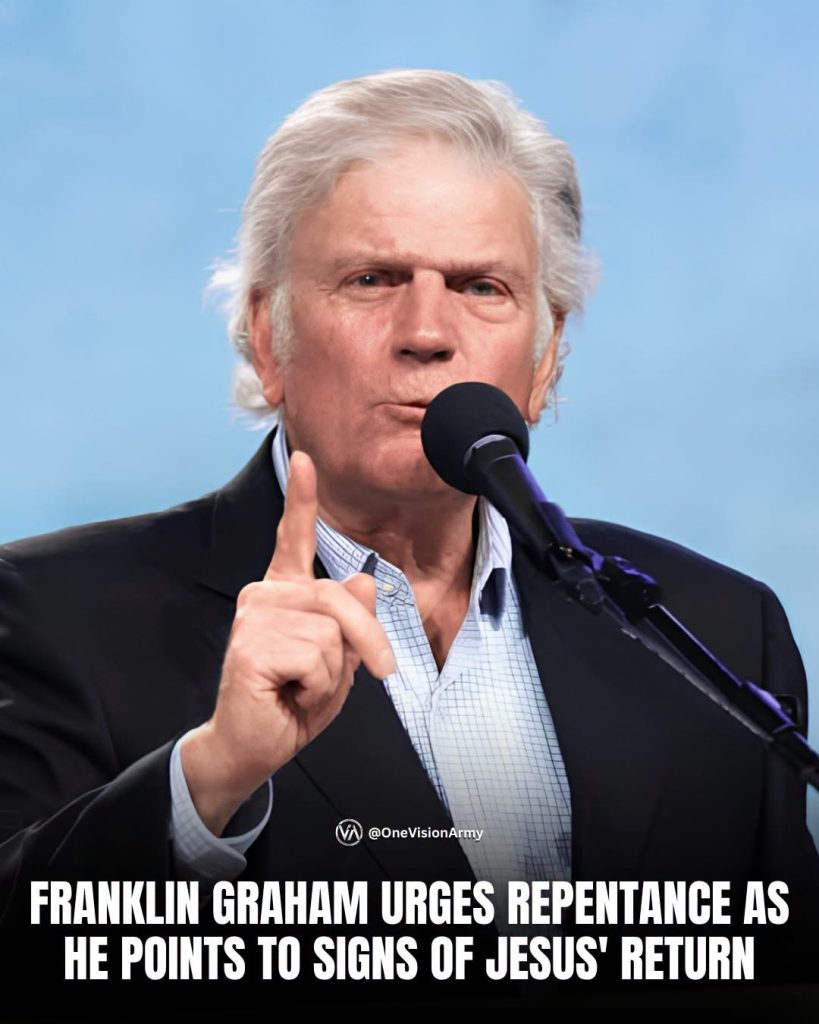
Evangelist Franklin Graham publicly issued a call for repentance, pointing to unfolding global events and social shifts as indicators aligning with biblical prophecies regarding the second coming of Jesus Christ.
In contemporary news coverage and secular commentary, global crises, moral shifts, and international conflicts are typically analyzed through geopolitical, economic, or sociological frameworks. Secular perspectives view calls for repentance or eschatological warnings primarily as religious rhetoric or alarmism, interpreting world events as random historical cycles or human-driven developments rather than signs of divine timeline fulfillment.
Scripture frequently urges believers to remain vigilant, discern the signs of the times, and maintain a heart of repentance in anticipation of Christ’s return. Matthew 24:42 advises believers to watch and be ready, while 2 Peter 3:9 highlights God’s patience and desire for redemption, explaining that the Lord is not slow in keeping His promise, but is patient, wanting everyone to come to repentance.
Framing current world events through a prophetic lens directly challenges secular assumptions of endless human progress and self-sufficiency. Urging spiritual readiness amidst global uncertainty serves as an urgent reminder that human history moves toward a sovereign, divine conclusion, calling individuals to prioritize eternal reconciliation with God.