
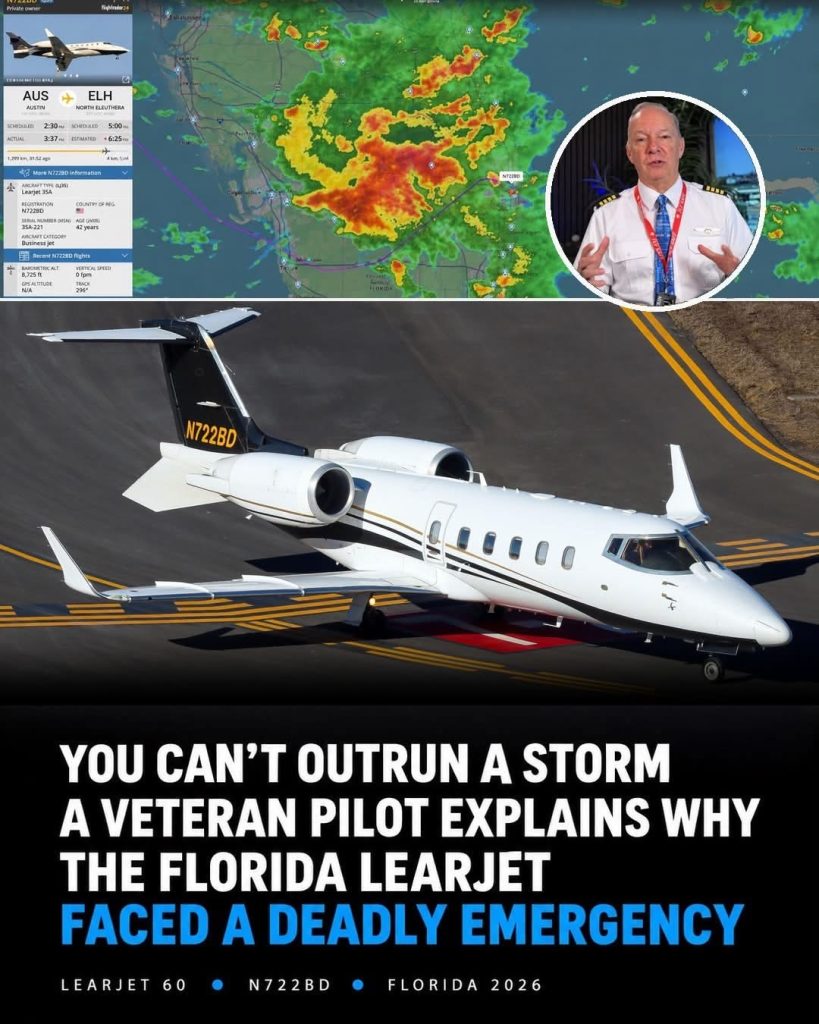
You can fly faster, climb higher or change direction, but you cannot outrun a powerful thunderstorm. A veteran pilot explains why trying to beat severe weather can put an aircraft in even greater danger.
Thunderstorms are not simply areas of heavy rain. They can contain powerful updrafts, violent turbulence, wind shear, hail and rapidly changing conditions. These forces can overwhelm an aircraft’s ability to maintain stable flight, even at high altitude.
That danger is now receiving attention following the November 1 crash of Learjet 60 N722BD in South Florida, which claimed all nine lives aboard.
Before the accident, the crew reported icing, moderate turbulence and precipitation to air traffic control. They requested a climb to 37,000 feet. Moments later, they declared an emergency and reported a rapid descent and overspeed condition.
Aviation experts have discussed how severe icing and storm-related airflow may have affected the aircraft. However, the exact cause remains under investigation by the NTSB.
The lesson is clear: experienced pilots do not try to outrun dangerous weather. They plan around it, give storms a wide berth and avoid taking unnecessary risks.
When it comes to severe weather, the safest route is often the one that takes you around it.